List of practice Questions

The doctrine of res judicata requires that a party should not be allowed to file same matter repeatedly against the other party either in the same court or in other competent court and that the decision given by one court should be accepted as final subject to any appeal, revision or review. The doctrine is founded on the principle that it is in the interest of the public at large that a finality should be attached to the binding decisions pronounced by courts of competent jurisdiction, and it is also in the public interest that individuals should not be vexed twice over with the same kind of litigation. This apart, the object of the doctrine is to ensure that ultimately there should be an end to litigation. Doctrine of res judicata is embodied in Section 11 of the Code of Civil Procedure, 1908 which governs the procedure to be followed in civil matters. Section 11 is inapplicable to writ jurisdictions. The Supreme Court has observed that though the rule is technical in nature yet the general doctrine of res judicata is based on public policy and therefore, it cannot be treated as irrelevant or inadmissible even in dealing with fundamental rights in petitions filed under Article 32 of the Constitution of India. The court observed that if a writ petition filed by a party under Article 226 of the Constitution of India is considered on merits as a contested matter and is dismissed, the decision thus pronounced would continue to bind the parties unless it is otherwise modified or reversed in appeal or other appropriate proceedings permissible under the Constitution of India. It would not be open to a party to ignore the judgment of the High Court and move Supreme Court under Article 32 by an original petition made on the same facts and for obtaining the same or similar orders or writs. If the petition filed in the High Court under Article 226 is dismissed but not on the merits, then the dismissal of the writ petition would not constitute a bar to a subsequent petition under Article 32, however if the petition is dismissed without passing a speaking order, then such dismissal cannot be treated as creating a bar of res judicata.
Marriage is necessarily the basis of social organisation and the foundation of important legal rights and obligations. The importance and imperative character of the institution of marriage needs no comment. In Hindu law, marriage is treated as a Samskara or a sacrament. The Hindu Marriage Act, 1955 introduced monogamy as a law of marriage among Hindus by virtue of Section 5 clause (i) which is essentially the voluntary union for life of one man with one woman to the exclusion of all others. It enacts, “neither party must have a spouse living at the time of marriage”. The expression ‘spouse’ here used, means a lawfully married husband or wife. Before a valid marriage can be solemnised, both parties to such marriage must be either single or divorced or a widow or a widower and only then they are competent to enter into a valid marriage. If at the time of performance of the marriage rites and ceremonies, one or other of the parties had a spouse living and the earlier marriage had not already been set aside, the later marriage is no marriage at all. The Supreme Court in Bhaurao Shankar Lokhande v. State of Maharashtra, [AIR 1965 SC 1564] held, “Prima facie, the expression ‘whoever marries’ in Section 494 of the Indian Penal Code, 1860 (which defines the offence of bigamy) must mean ‘whoever marries validly’ or ‘whoever marries and whose marriage is a valid one’. If marriage is not valid according to the law applicable to the parties, no question arises of its being void by reason of its taking place during the life of the husband or wife of the person marrying. One of the conditions of a valid marriage under the Hindu Marriage Act, 1955 is that it must be ‘solemnised’. Further, Section 13 (2) of the Act provides for grounds of divorce to wife and states, “A wife may also present a petition for the dissolution of her marriage by a decree of divorce on the ground that in the case of any marriage solemnized before the commencement of this Act, that the husband had married again before such commencement or that any other wife of the husband married before such commencement was alive at the time of the solemnization of the marriage of the petitioner: Provided that in either case the other wife is alive at the time of the presentation of the petition”.
The Indian Penal Code, 1860 does not define ‘consent’ in positive terms, but what cannot be regarded as ‘consent’ under the Code is explained by Section 90. Section 90 reads as follows: “90. Consent known to be given under fear or misconception - A consent is not such a consent as is intended by any section of this Code, if the consent is given by a person under fear of injury, or under a misconception of fact, and if the person doing the act knows, or has reason to believe, that the consent was given in consequence of such fear or misconception;…” Consent given firstly under fear of injury and secondly under a misconception of fact is not ‘consent’ at all. That is what is enjoined by the first part of Section 90. These two grounds specified in Section 90 are analogous to coercion and mistake of fact which are the familiar grounds that can vitiate a transaction under the jurisprudence of our country as well as other countries. The factors set out in the first part of Section 90 are from the point of view of the victim. The second part of Section 90 enacts the corresponding provision from the point of view of the accused. It envisages that the accused too has knowledge or has reason to believe that the consent was given by the victim in consequence of fear of injury or misconception of fact. Thus, the second part lays emphasis on the knowledge or reasonable belief of the person who obtains the tainted consent. The requirements of both the parts should be cumulatively satisfied. In other words, the court has to see whether the person giving the consent had given it under fear of injury or misconception of fact and the court should also be satisfied that the person doing the act i.e. the alleged offender, is conscious of the fact or should have reason to think that but for the fear or misconception, the consent would not have been given. This is the scheme of Section 90 which is couched in negative terminology. Section 90 cannot, however, be construed as an exhaustive definition of consent for the purposes of the Indian Penal Code, 1860. The normal connotation and concept of ‘consent’is not intended to be excluded. Various decisions of the High Court and of Supreme Court have not merely gone by the language of Section 90, but travelled a wider field, guided by the etymology of the word ‘consent’.
The COVID-19 pandemic and the unmatched mental health challenges have made it more crucial than ever that we continue to make strides towards understanding the concept of mental health stigma and how we might tackle it around the world. Graham Thornicroft, a practising psychiatrist, who is extensively and deeply involved in mental health stigma research at the Institute of Psychiatry, Psychology and Neurosciences at King’s College London has divided stigma into three components-knowledge, attitude and behaviour. The last behaviour emerges from social isolation, such as what we are experiencing during the pandemic, as well as exclusion from mainstream activities and citizenship. In higher-income countries, stigma rates may be greater than other countries, perhaps because of the pressure to excel. In low-income countries, one can be unwell and still play an active social and productive role somewhere as there are many such roles to play within the family and in society. Enhancing contact with people who have experienced mental health problems is the best way to reduce stigma. To date, most people with mental illness remain silent about their condition, avoiding discussing their problems for fear of losing face, damaging their reputation or jeopardising their family status. Having a space where they may be welcomed and listened to, rather than judged, will go a long way towards enabling them to share their experiences. In a small part of rural Andhra Pradesh, researchers used posters, pictures, drums, and a short street play, as an intervention technique to reduce mental health stigma. An actor portrayed a person’s journey through mental health crises and setbacks before receiving support and showing hope, improvement and recovery. People assembled around the stage, willing to talk about and discuss what they saw, even two to three years after the event.
One of the most important challenges for Indian diplomacy in the subcontinent is to persuade its neighbours that India is an opportunity, not a threat. Far from feeling in any way besieged by India, they should be able to see it as offering access to a vast market and to a dynamic, growing economy which would provide their own economies with far greater opportunities than more distant partners (or even their own domestic markets) could provide. This would go beyond economic benefits: as David Malone argues, “Economic cooperation represents the easiest ‘sell’ to various constituencies within the countries of the region. Were this to prove successful, cooperation on more divisive and sensitive issues, such as terrorism, separatism, insurgency, religious fundamentalism, and ethnic strife, could be attempted with greater chances of success.” Winds of change are blowing in South Asia. There is a definite consolidation of democracy in all the countries of the region, every one of which has held elections within the last three years. Some of our neighbours have made significant strides in surmounting internal conflict and others are in the process of doing so. If India has to fulfil its potential in the world, we have no choice but to live in peace with our neighbours, in mutual security, harmony and cooperation. Just as Nehru left Robert Frost’s immortal lines “Miles to go before I sleep” on his bedside table when he died, Shastri kept some lines of the founder of the Sikh faith, Guru Nanak, on his desk. When translated into English they read: “O Nanak! Be tiny like the grass, for other plants will wither away, but grass will remain ever green.” Shastri was seen by many Indians of exalted ambition as a tiny man, but he had the mind and heart of a giant. His vision of peaceful coexistence with our neighbours, through adopting the demeanour, the modesty and the freshness of grass, may well be the best way for India to ensure that its dreams remain evergreen in its own backyard
The critique of school as an institution has developed and grown in the past half a century. Education theorist Everett Reimer wrote School is Dead in the 1960s. Most schools are caged jails, where an alien curriculum designed by some ‘experts’ is thrust down a child’s gullet. Today, many schools are gargantuan corporate enterprises with thousands of children on their rolls, and for all practical purposes they are run like factories, or better still like mini-armies. The website of a private school in Lucknow boasts of 56,000 students, for instance. But progressive thinkers have always envisioned ‘free schools’ for children. The great Russian novelist, Leo Tolstoy, founded a school for the children of poor peasants at his home, Yasnaya Polyana, without any strict schedule, homework or physical punishment. Maria Montessori was the first Italian woman to become a doctor; she went on to work out the ‘stages of development’ in children which became the basis for her educational philosophy, which too emphasised children’s freedom and choice. Tagore’s critique of rote learning is articulated in the classic tale ‘The Parrot’s Training’ (Totaakahini). Perhaps, the longest lasting libertarian school in the world is Summerhill. It was founded in 1921, a hundred years ago in England, by A.S. Neill with the belief that school should be made to fit the child rather than the other way round. The 1966 Kothari Education Commission’s recommendation for a common school system was never implemented. Today, which school a child goes to depends on her socioeconomic status. The pandemic has furthered and exacerbated this divide. COVID-19 hit parents economically. The digital divide between the rich and poor has also widened. The poor do not have access to mobiles, laptops and internet connectivity. In such a scenario, one can try and conceive of neighbourhood learning spaces.
Asia is at the front line of climate change. Extreme heat in India, Pakistan, and Bangladesh, wildfires in Australia, typhoons in Japan, are real and present dangers and likely to become more frequent as climate change intensifies. McKinsey’s report on ‘Climate risk and response in Asia’, finds that, without adaptation and mitigation, Asia is expected to experience more severe socioeconomic impacts of climate change than other parts of the world. Large cities in the Indian Subcontinent could be among the first places in the world to experience heat waves that exceed the survivability threshold. Just as information systems and cybersecurity have become integrated into corporate and public-sector decision making, climate change will also need to feature as a major factor in decisions. Climate science tells us that some amount of warming over the next decade is already locked in due to past emissions, and temperatures will continue to rise. India anticipates a significant infrastructure build out over the next decades with projects worth $1.77 trillion across 34 sub sectors, according to the National Infrastructure Pipeline. Robust regulations around outdoor work could significantly reduce the economic risk of lost hours as well as the toll on life from heat waves. The good news is that we have started to see some Indian states and cities pursuing such policies. Ahmedabad City Corporation introduced a heat action plan- the first of its kind in India in response to the 2010 heat wave that killed 300 people in a single day. The city now has a heat-wave early warning system, a citywide programme of roof reflectivity to keep buildings cool, and teams to distribute cool water and rehydration tablets during heat waves. Renewable energy has grown rapidly in India and can contribute 30 per cent of gross electricity generation by 2030, according to the Central Electricity Authority.
COVID-19 infections are once again on the rise with daily infections crossing 60,000 per day last week. This is considerably higher compared to the reported infections during the same period last year when the numbers were less than 500 per day. What is obvious is that the pandemic is far from over despite the availability of vaccines. However, unlike last year, the response this time has been muted with no nationwide lockdown. One of the reasons for the differing responses is the lesson from the unintended consequences on the economy of the strict lockdown last year. While aggregate estimates on the growth rate of GDP showed a sharp contraction in economic activity (the economy shrunk by 24 per cent in the April-June quarter of 2020) the impact on lives and livelihoods is still unfolding even though the sharp contractionary phase seems behind us. The extent of the loss of lives and livelihoods is becoming clear only now, with detailed data from the Periodic Labour Force Surveys (PLFS) - the latest round of which is for the April-June quarter of 2020. This is the first official report on the estimates for the quarter, which witnessed the worst impact with the lockdown in force until the middle of May. Visuals of thousands of migrants walking back to their villages are still fresh in the mind. While many have returned to urban areas in the absence of jobs in rural areas, many did not. The PLFS, which captures the employment-unemployment situation in urban areas, provides some clues to what happened. The estimates from PLFS are broadly in line with estimates available from other privately conducted surveys, notably the unemployment surveys of the Centre for Monitoring Indian Economy (CMIE). According to the PLFS April-June 2020 round, the urban unemployment rate for the population above the age of 15 was 20.8 per cent, which is close to the monthly average for the same quarter from CMIE at 19.9 per cent. The CMIE data, however, does suggest a sharp decline in June compared to April and May. Similar to the CMIE data, the PLFS data also shows a sharp rise in the unemployment rate which more than doubled compared to the unemployment rate in the preceding quarter of January-March 2020 at 9.1 per cent and 8.8 per cent in the same quarter (April-June) of 2019. While one in five persons above the age of 15 was unemployed during April-June 2020, the unemployment rate among the 15-29-year-olds was 34.7 per cent - every third person in the 15-29 age group was unemployed during the same period. These are staggering numbers, but not surprising. While the lockdown certainly contributed to the worsening of the employment situation, particularly in urban areas, the fact that the economy was already going through severe distress as far as jobs are concerned is no longer surprising. Between 2016-17 and 2019-20, growth decelerated to 4 per cent, less than half the 8.3 per cent rate in 2016-17. The fact that the economy has not been creating jobs predates the economic shocks of demonetisation and the hasty roll-out of GST. The PLFS data from earlier rounds have already shown the extent of the rise in unemployment compared to the employment unemployment surveys of 2011-12. The unemployment rates in urban areas for all categories increased by almost three times between 2011-12 and 2017-18. On an internationally comparable basis, the unemployment rate among the 15-24-year-olds in 2017-18 was 28.5 per cent, which makes the youth unemployment rate in India amongst the highest in the world, excluding small countries and conflict-ridden countries. Since then, it has only worsened or remained at that level.
On the day of writing this, India had reported 116 deaths from COVID-19. In contrast, the US, with around one-fourth the population of India, reported 1,897 deaths, or 16 times the daily deaths as India. The UK, which has one-twentieth the population of India, reported 592 deaths, or 5 times the daily deaths as India. On other metrics too-new cases, active cases-the Indian curve has flattened. If and when the UK and the US achieve what we have, there will be major celebrations. Such low death rates would be seen as a victory of the government, citizens and science over the dreaded coronavirus. However, because we are India, we don’t get as much credit. We are considered poor, third-world and untrustworthy, incapable of achieving something like this on our own. Instead of learning from India’s experience, the first instinct is to doubt Indian data. We aren’t counting the cases right, we aren’t doing enough tests, we don’t classify the deaths properly-the list of doubts goes on and on. This, even as the tests have only increased, positivity rate has dropped and almost all Indian hospitals are seeing a drop in COVID-19 admissions and fatalities. To think that the Deep Indian State is capable of fudging data at the level of every district and every state, and sustaining this façade for months is giving it way too much credit. Conspiracies require enormous co-ordination and effort and it isn’t quite how things work in India. Given that you can check corona data at every ward level, it is also impossible to fudge data, not to mention create a downwards curve that is moving in the same direction in virtually every corner of India. In terms of testing, while a case might be made for a lot of Indians not getting tested, it is also true that random testing has increased in the last few months. Domestic flyers into Maharashtra from many states for instance, have to get a COVID-19 test done irrespective of symptoms. If there was rampant corona, we would see a spike in cases from just these flyers. It may be hard for people to accept this reality but almost all evidence points to the fact India has flattened the corona curve, while the US, UK and most of Europe still haven’t. What is even more remarkable about India’s achievement is that it has managed to do this without draconian lockdowns (apart from the two months in April-May 2020). In fact, cases have dropped even as India opened up more.
Direction for Reading Comprehension: The passages given here are followed by some questions that have four answer choices; read the passage carefully and pick the option whose answer best aligns with the passage.
Starting in 1957, [Noam Chomsky] proclaimed a new doctrine: Language, that most human of all attributes, was innate. The grammatical faculty was built into the infant brain, and your average 3-year-old was not a mere apprentice in the great enterprise of absorbing English from his or her parents, but a “linguistic genius.” Since this message was couched in terms of Chomskyan theoretical linguistics, in discourse so opaque that it was nearly incomprehensible even to some scholars, many people did not hear it. Now, in a brilliant, witty and altogether satisfying book, Mr. Chomsky's colleague Steven Pinker . . . has brought Mr. Chomsky's findings to everyman. In “The Language Instinct” he has gathered persuasive data from such diverse fields as cognitive neuroscience, developmental psychology and speech therapy to make his points, and when he disagrees with Mr. Chomsky he tells you so. . . .
For Mr. Chomsky and Mr. Pinker, somewhere in the human brain there is a complex set of neural circuits that have been programmed with “super-rules” (making up what Mr. Chomsky calls “universal grammar”), and that these rules are unconscious and instinctive. A half-century ago, this would have been pooh-poohed as a “black box” theory, since one could not actually pinpoint this grammatical faculty in a specific part of the brain, or describe its functioning. But now things are different. Neurosurgeons [have now found that this] “blackbox” is situated in and around Broca’s area, on the left side of the forebrain. . . .
Unlike Mr. Chomsky, Mr. Pinker firmly places the wiring of the brain for language within the framework of Darwinian natural selection and evolution. He effectively disposes of all claims that intelligent nonhuman primates like chimps have any abilities to learn and use language. Itis not that chimps lack the vocal apparatus to speak; it is just that their brains are unable to produce or use grammar. On the other hand, the “language instinct,” when it first appeared among our most distant hominid ancestors, must have given them a selective reproductive advantage over their competitors (including the ancestral chimps). . . .
So according to Mr. Pinker, the roots of language must be in the genes, but there cannot be a “grammar gene” any more than there can be a gene for the heart or any other complex body structure. This proposition will undoubtedly raise the hackles of some behavioural psychologists and anthropologists, for it apparently contradicts the liberal idea that human behavior may be changed for the better by improvements in culture and environment, and it might seem to invite the twin bugaboos of biological determinism and racism. Yet Mr. Pinker stresses one point that should allay such fears. Even though there are 4,000 to 6,000languages today, they are all sufficiently alike to be considered one language by an extraterrestrial observer. In other words, most of the diversity of the world’s cultures, so beloved to anthropologists, is superficial and minor compared to the similarities. Racial differences are literally only “skin deep.” The fundamental unity of humanity is the theme of Mr. Chomsky's universal grammar, and of this exciting book.
Direction for Reading Comprehension: The passages given here are followed by some questions that have four answer choices; read the passage carefully and pick the option whose answer best aligns with the passage.
Keeping time accurately comes with a price. The maximum accuracy of a clock is directly related to how much disorder, or entropy, it creates every time it ticks. Natalia Ares at the University of Oxford and her colleagues made this discovery using a tiny clock with an accuracy that can be controlled. The clock consists of a 50-nanometre-thick membrane of silicon nitride, vibrated by an electric current. Each time the membrane moved up and down once and then returned to its original position, the researchers counted a tick, and the regularity of the spacing between the ticks represented the accuracy of the clock. The researchers found that as they increased the clock’s accuracy, the heat produced in the system grew, increasing the entropy of its surroundings by jostling nearby particles . . . “If a clock is more accurate, you are paying for it somehow,” says Ares. In this case, you pay for it by pouring more ordered energy into the clock, which is then converted into entropy. “By measuring time, we are increasing the entropy of the universe,” says Ares. The more entropy there is in the universe, the closer it may be to its eventual demise. “Maybe we should stop measuring time,” says Ares. The scale of the additional entropy is so small, though, that there is no need to worry about its effects, she says.
The increase in entropy in timekeeping may be related to the “arrow of time”, says Marcus Huber at the Austrian Academy of Sciences in Vienna, who was part of the research team. It has been suggested that the reason that time only flows forward, not in reverse, is that the total amount of entropy in the universe is constantly increasing, creating disorder that cannot be put in order again.
The relationship that the researchers found is a limit on the accuracy of a clock, so it doesn’t mean that a clock that creates the most possible entropy would be maximally accurate – hence a large, inefficient grandfather clock isn’t more precise than an atomic clock. “It’s a bit like fuel use in a car. Just because I’m using more fuel doesn’t mean that I’m going faster or further,” says Huber.
When the researchers compared their results with theoretical models developed for clocks that rely on quantum effects, they were surprised to find that the relationship between accuracy and entropy seemed to be the same for both. . . . We can’t be sure yet that these results are actually universal, though, because there are many types of clocks for which the relationship between accuracy and entropy haven’t been tested. “It’s still unclear how this principle plays out in real devices such as atomic clocks, which push the ultimate quantum limits of accuracy,” says Mark Mitchison at Trinity College Dublin in Ireland. Understanding this relationship could be helpful for designing clocks in the future, particularly those used in quantum computers and other devices where both accuracy and temperature are crucial, says Ares. This finding could also help us understand more generally how the quantum world and the classical world are similar and different in terms of thermodynamics and the passage of time.
Direction for Reading Comprehension: The passages given here are followed by some questions that have four answer choices; read the passage carefully and pick the option whose answer best aligns with the passage.
Back in the early 2000s, an awesome thing happened in the New X-Men comics. Our mutant heroes had been battling giant robots called Sentinels for years, but suddenly these mechanical overlords spawned a new threat: Nano-Sentinels! Not content to rule Earth with their metal fists, these tiny robots invaded our bodies at the microscopic level. Infected humans were slowly converted into machines, cell by cell.
Now, a new wave of extremely odd robots is making at least part of the Nano-Sentinels story come true. Using exotic fabrication materials like squishy hydrogels and elastic polymers, researchers are making autonomous devices that are often tiny and that could turn out to be more powerful than an army of Terminators. Some are 1-centimetre blobs that can skate overwater. Others are flat sheets that can roll themselves into tubes, or matchstick-sized plastic coils that act as powerful muscles. No, they won’t be invading our bodies and turning us into Sentinels – which I personally find a little disappointing – but some of them could one day swim through our bloodstream to heal us. They could also clean up pollutants in water or fold themselves into different kinds of vehicles for us to drive. . . .
Unlike a traditional robot, which is made of mechanical parts, these new kinds of robots are made from molecular parts. The principle is the same: both are devices that can move around and do things independently. But a robot made from smart materials might be nothing more than a pink drop of hydrogel. Instead of gears and wires, it’s assembled from two kinds of molecules – some that love water and some that avoid it – which interact to allow the bot to skate on top of a pond.
Sometimes these materials are used to enhance more conventional robots. One team of researchers, for example, has developed a different kind of hydrogel that becomes sticky when exposed to a low-voltage zap of electricity and then stops being sticky when the electricity is switched off. This putty-like gel can be pasted right onto the feet or wheels of a robot. When the robot wants to climb a sheer wall or scoot across the ceiling, it can activate its sticky feet with a few volts. Once it is back on a flat surface again, the robot turns off the adhesive like a light switch.
Robots that are wholly or partly made of gloop aren’t the future that I was promised in science fiction. But it’s definitely the future I want. I’m especially keen on the nanometre- scale “soft robots” that could one day swim through our bodies. Metin Sitti, a director at the Max Planck Institute for Intelligent Systems in Germany, worked with colleagues to prototype these tiny, synthetic beasts using various stretchy materials, such as simple rubber, and seeding them with magnetic microparticles. They are assembled into a finished shape by applying magnetic fields. The results look like flowers or geometric shapes made from Tinkertoy ball and stick modelling kits. They’re guided through tubes of fluid using magnets, and can even stop and cling to the sides of a tube
Direction for Reading Comprehension: The passages given here are followed by some questions that have four answer choices; read the passage carefully and pick the option whose answer best aligns with the passage.
Today we can hardly conceive of ourselves without an unconscious. Yet between 1700 and1900, this notion developed as a genuinely original thought. The “unconscious” burst the shell of conventional language, coined as it had been to embody the fleeting ideas and the shifting conceptions of several generations until, finally, it became fixed and defined in specialized terms within the realm of medical psychology and Freudian psychoanalysis.
The vocabulary concerning the soul and the mind increased enormously in the course of the nineteenth century. The enrichments of literary and intellectual language led to an altered understanding of the meanings that underlie time-honored expressions and traditional catchwords. At the same time, once coined, powerful new ideas attracted to themselves a whole host of seemingly unrelated issues, practices, and experiences, creating a peculiar network of preoccupations that as a group had not existed before. The drawn-out attempt to approach and define the unconscious brought together the spiritualist and the psychical researcher of borderline phenomena (such as apparitions, spectral illusions, haunted houses, mediums, trance, automatic writing); the psychiatrist or alienist probing the nature of mental disease, of abnormal ideation, hallucination, delirium, melancholia, mania; the surgeon performing operations with the aid of hypnotism; the magnetizer claiming to correct the disequilibrium in the universal flow of magnetic fluids but who soon came to be regarded as a clever manipulator of the imagination; the physiologist and the physician who puzzled oversleep, dreams, sleepwalking, anesthesia, the influence of the mind on the body in health and disease; the neurologist concerned with the functions of the brain and the physiological basis of mental life; the philosopher interested in the will, the emotions, consciousness, knowledge, imagination and the creative genius; and, last but not least, the psychologist.
Significantly, most if not all of these practices (for example, hypnotism in surgery or psychological magnetism) originated in the waning years of the eighteenth century and during the early decades of the nineteenth century, as did some of the disciplines (such as psychology and psychical research). The majority of topics too were either new or assumed hitherto unknown colors. Thus, before 1790, few if any spoke, in medical terms, of the affinity between creative genius and the hallucinations of the insane . . .
Striving vaguely and independently to give expression to a latent conception, various lines of thought can be brought together by some novel term. The new concept then serves as a kind of resting place or stocktaking in the development of ideas, giving satisfaction and a stimulus for further discussion or speculation. Thus, the massive introduction of the term unconscious by Hartmann in 1869 appeared to focalize many stray thoughts, affording a temporary feeling that a crucial step had been taken forward, a comprehensive knowledge gained, a knowledge that required only further elaboration, explication, and unfolding in order to bring in a bounty of higher understanding. Ultimately, Hartmann’s attempt at defining the unconscious proved fruitless because he extended its reach into every realm of organic and inorganic, spiritual, intellectual, and instinctive existence, severely diluting the precision and compromising the impact of the concept.
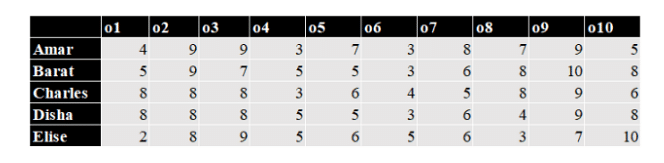
Ravi works in an online food-delivery company. After each delivery, customers rate Ravi on each of four parameters - Behaviour, Packaging, Hygiene, and Timeliness, on a scale from 1 to 9. If the total of the four rating points is 25 or more, then Ravi gets a bonus of ₹20 for that delivery. Additionally, a customer may or may not give Ravi a tip. If the customer gives a tip, it is either ₹30 or ₹50. One day, Ravi made four deliveries - one to each of Atal, Bihari, Chirag, and Deepak, and received a total of ₹120 in bonus and tips. He did not get both a bonus and a tip from the same customer.
The following additional facts are also known.
1. In Timeliness, Ravi received a total of 21 points, and three of the customers gave him the same rating points in this parameter. Atal gave higher rating points than Bihari and Chirag in this parameter.
2. Ravi received distinct rating points in Packaging from the four customers adding up to 29 points. Similarly, Ravi received distinct rating points in Hygiene from the four customers adding up to 26 points.
3. Chirag gave the same rating points for Packaging and Hygiene.
4. Among the four customers, Bihari gave the highest rating points in Packaging, and Chirag gave the highest rating points in Hygiene.
5. Everyone rated Ravi between 5 and 7 in Behaviour. Unique maximum and minimum ratings in this parameter were given by Atal and Deepak respectively.
6. If the customers are ranked based on ratings given by them in individual parameters, then Atal’s rank based on Packaging is the same as that based on Hygiene. This is also true for Deepak.
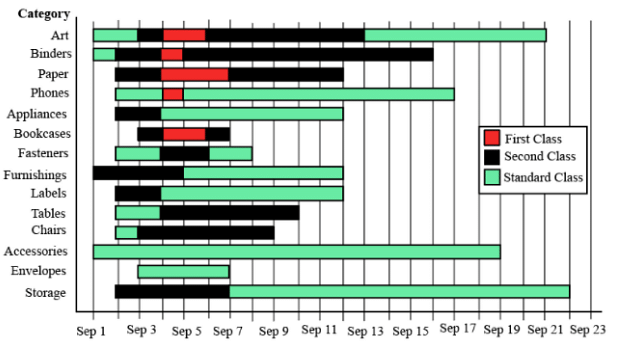
Three reviewers Amal, Bimal, and Komal are tasked with selecting questions from a pool of 13 questions (Q01 to Q13). Questions can be created by external “subject matter experts” (SMEs) or by one of the three reviewers. Each of the reviewers either approves or disapproves a question that is shown to them. Their decisions lead to eventual acceptance or rejection of the question in the manner described below.
If a question is created by an SME, it is reviewed first by Amal, and then by Bimal. If both of them approve the question, then the question is accepted and is not reviewed by Komal. If both disapprove the question, it is rejected and is not reviewed by Komal. If one of them approves the question and the other disapproves it, then the question is reviewed by Komal. Then the question is accepted only if she approves it.
A question created by one of the reviewers is decided upon by the other two. If a question is created by Amal, then it is first reviewed by Bimal. If Bimal approves the question, then itis accepted. Otherwise, it is reviewed by Komal. The question is then accepted only if Komal approves it. A similar process is followed for questions created by Bimal, whose questions are first reviewed by Komal, and then by Amal only if Komal disapproves it. Questions created by Komal are first reviewed by Amal, and then, if required, by Bimal.
The following facts are known about the review process after its completion.
1. Q02, Q06, Q09, Q11, and Q12 were rejected and the other questions were accepted.
2. Amal reviewed only Q02, Q03, Q04, Q06, Q08, Q10, Q11, and Q13.
3. Bimal reviewed only Q02, Q04, Q06 through Q09, Q12, and Q13.
4. Komal reviewed only Q01 through Q05, Q07, Q08, Q09, Q11, and Q12.
10 players – P1, P2, … , P10 - competed in an international javelin throw event. The number(after P) of a player reflects his rank at the beginning of the event, with rank 1 going to the topmost player. There were two phases in the event with the first phase consisting of rounds 1,2, and 3, and the second phase consisting of rounds 4, 5, and 6. A throw is measured in terms of the distance it covers (in meters, up to one decimal point accuracy), only if the throw is a ‘valid’ one. For an invalid throw, the distance is taken as zero. A player’s score at the end of around is the maximum distance of all his throws up to that round. Players are re-ranked after every round based on their current scores. In case of a tie in scores, the player with a prevailing higher rank retains the higher rank. This ranking determines the order in which the players go for their throws in the next round.
In each of the rounds in the first phase, the players throw in increasing order of their latest rank, i.e. the player ranked 1 at that point throws first, followed by the player ranked 2 at that point and so on. The top six players at the end of the first phase qualify for the second phase. In each of the rounds in the second phase, the players throw in decreasing order of their latest rank i.e. the player ranked 6 at that point throws first, followed by the player ranked 5 at that point and so on. The players ranked 1, 2, and 3 at the end of the sixth round receive gold, silver, and bronze medals respectively.
All the valid throws of the event were of distinct distances (as per stated measurement accuracy). The tables below show distances (in meters) covered by all valid throws in the first and the third round in the event. 
Distances covered by all the valid throws in the first round 
PlayerDistance (in m)
P182.9
P381.5
P586.4
P682.5
P787.2
P984.1
Distances covered by all the valid throws in the third round
PlayerDistance (in m)
P188.6
P379.0
P981.4
The following facts are also known.
I. Among the throws in the second round, only the last two were valid. Both the throws enabled these players to qualify for the second phase, with one of them qualifying with the least score. None of these players won any medal.
II. If a player throws first in a round AND he was also the last (among the players in the current round) to throw in the previous round, then the player is said to get a double. Two players got a double.
III. In each round of the second phase, exactly one player improved his score. Each of these improvements was by the same amount.
IV. The gold and bronze medalists improved their scores in the fifth and the sixth rounds respectively. One medal winner improved his score in the fourth round.
V. The difference between the final scores of the gold medalist and the silver medalist, as well as the difference between the final scores of the silver medalist and the bronze medalist was1.0 m.