Following are the statements with reference to ??ipids.
(a) Lipids having only single bonds are called unsaturated fatty acids.
(b) Lecithin is a phospholipid.
(c) Trihydroxy propane is glycerol.
(d) Palmitic acid has 20 carbon atoms including carboxyl carbon.
(e) Arachidonic acid has 16 carbon atoms.
Choose the correct answer from the options given below.
- (a) and (b) only
- (c) and (d) only
- (b) and (c) only
- (b) and (e) only

The Correct Option is C
Solution and Explanation
The given question asks us to identify the correct statements regarding lipids. Let's evaluate each statement:
- Statement (a): "Lipids having only single bonds are called unsaturated fatty acids."
- This statement is incorrect. Lipids with only single bonds are called saturated fatty acids. Unsaturated fatty acids contain one or more double bonds between carbon atoms.
- Statement (b): "Lecithin is a phospholipid."
- This statement is correct. Lecithin is indeed a phospholipid, which is a major component of cell membranes and is involved in lipid metabolism.
- Statement (c): "Trihydroxy propane is glycerol."
- This statement is correct. Glycerol, a simple polyol compound, is also known as trihydroxy propane as it contains three hydroxyl (-OH) groups.
- Statement (d): "Palmitic acid has 20 carbon atoms including carboxyl carbon."
- This statement is incorrect. Palmitic acid has 16 carbon atoms, not 20, including the carboxyl carbon.
- Statement (e): "Arachidonic acid has 16 carbon atoms."
- This statement is incorrect. Arachidonic acid actually has 20 carbon atoms.
Based on the evaluation above, the correct statements are (b) and (c). Thus, the correct answer is:
| (b) and (c) only |
Top Questions on Lipids
- A patient presents with xanthomas on the Achilles tendon. Which of the following is the most likely diagnosis?
- A patient with multiple tendon xanthomas is found to have a serum cholesterol level of 398 mg/dL and an LDL level of 220 mg/dL. What is the most likely defect?
- Which of the following has the lowest melting point?
- Ceramides are
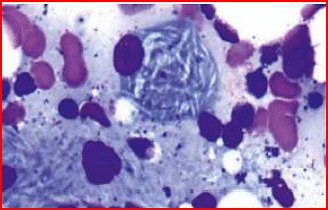
- A child presents with bone pain and hepatosplenomegaly. A trephine biopsy and aspirate show the following finding. Which of the following is the most likely enzyme deficient in this condition?
Questions Asked in NEET exam
- Two cities X and Y are connected by a regular bus service with a bus leaving in either direction every T min. A girl is driving scooty with a speed of 60 km/h in the direction X to Y. She notices that a bus goes past her every 30 minutes in the direction of her motion, and every 10 minutes in the opposite direction. Choose the correct option for the period T of the bus service and the speed (assumed constant) of the buses.
- NEET (UG) - 2025
- Relative Velocity
- A physical quantity P is related to four observations a, b, c, and d as follows: P = a3 b2 (c / √d) The percentage errors of measurement in a, b, c, and d are 1%, 3%, 2%, and 4% respectively. The percentage error in the quantity P is:
- NEET (UG) - 2025
- Dimensional analysis and its applications
What is Microalbuminuria ?
- NEET (UG) - 2025
- Human physiology
The output (Y) of the given logic implementation is similar to the output of an/a …………. gate.

- NEET (UG) - 2025
- Logic gates
- An oxygen cylinder of volume 30 litre has 18.20 moles of oxygen. After some oxygen is withdrawn from the cylinder, its gauge pressure drops to 11 atmospheric pressure at temperature \(27^\circ\)C. The mass of the oxygen withdrawn from the cylinder is nearly equal to: [Given, \(R = \frac{100}{12} \text{ J mol}^{-1} \text{K}^{-1}\), and molecular mass of \(O_2 = 32 \text{ g/mol}\), 1 atm pressure = \(1.01 \times 10^5 \text{ N/m}^2\)]
- NEET (UG) - 2025
- Ideal-gas equation and absolute temperature
Concepts Used:
Lipids
Lipids are organic compounds that are nonpolar molecules, which are soluble only in nonpolar solvents and insoluble in water because of the polarity of the water.
Properties of Lipids:
Lipids are one of the family members of organic compounds, imperturbable of fats and oils. These molecules yield high energy and are mainly responsible for different functionings within the human body. Listed below are some important characteristics of Lipids such as:
- Lipids are oily or greasy nonpolar molecules that are stored in the adipose tissue of the body.
- Lipids are a heterogeneous group of compounds that are mainly composed of hydrocarbon chains.
- Lipids are energy-rich organic molecules, which provide energy for different life processes.
- Lipids are a class of compounds characterized by their solubility in nonpolar solvents and insolubility in water.
- Lipids are consequential in biological systems as they form a mechanical barrier dividing a cell from the external environment known as the cell membrane.