HEPA filters are defined as A or more efficient in removing, from the air, B particles generated by vaporization of the hydrocarbon Emory 3004.
- A -99.99% B-0.1 μm
- A -99.00% B-0.3 μm
- A- 99.99% B-0.3 μm
- A-99.00 % B-0.1 μm

The Correct Option is C
Solution and Explanation
To accurately answer the given question, let's break down the components required for defining HEPA (High-Efficiency Particulate Air) filters. These filters are specifically designed to be highly effective in removing certain particles from the air.
HEPA filters are characterized by their efficiency and the size of particles they can successfully filter. The typical criteria for a filter to be classified as HEPA is as follows:
- Efficiency: At least 99.97% in filtering particles.
- Particle Size: Targets particles that are 0.3 micrometers (μm) in diameter, which is known as the most penetrating particle size (MPPS). The reason 0.3 μm particles are specified is because they are considered to be the hardest size to filter.
Given the typical HEPA filter specifications described above, the correct answer to the question is:
| A - 99.99% | B - 0.3 μm |
Reasoning:
- The efficiency mentioned in the question, 99.99%, is consistent with high-performance HEPA filters, which achieves a very high level of particle removal.
- The size 0.3 μm is spot on with the standardized smallest particulate size that HEPA filters are designed to effectively remove.
Therefore, option "A - 99.99% B - 0.3 μm" correctly aligns with the known standards for HEPA filters, hence it is the correct choice.
Top Questions on Polycyclic aromatic hydrocarbons
- Which of the following compounds will have the highest order of their reactivity towards electrophilic substitution reaction?

Choose the correct answer from the options given below:- CUET (PG) - 2024
- Chemistry
- Polycyclic aromatic hydrocarbons
- Which of the following molecules is aromatic?

- CUET (PG) - 2024
- Chemistry
- Polycyclic aromatic hydrocarbons
- Identify the product in the following chemical reaction:
- CUET (PG) - 2024
- Chemistry
- Polycyclic aromatic hydrocarbons
- Which of the following isomer of 1, 2-cyclohexanedicarboxylic acid forms an hydride on heating?

Choose the correct answer from the options given below:- CUET (PG) - 2024
- Chemistry
- Polycyclic aromatic hydrocarbons
- The major product formed in the above reaction is:
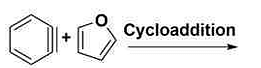
- GPAT - 2022
- Organic Chemistry
- Polycyclic aromatic hydrocarbons
Questions Asked in GPAT exam
- Match the following:
(1) Schedule FF
(2) Schedule F3
(3) Schedule V
(4) Schedule Y
Descriptions:
(P) Standards of patent and proprietary medicines
(Q) Requirements and guidelines for clinical trials
(R) Standards for sterilized umbilical tapes
(S) Standards for Ophthalmic preparations- GPAT - 2025
- Drug therapy
- If the label or the container bears the name of an individual or company purporting to be the manufacturer of the drug, which individual or company is fictitious or does not exist, it is:
- GPAT - 2025
- Drug therapy
- Manufacturing Specification for tooling has been standardized by?
- GPAT - 2025
- Pharmacy Profession & Introduction to Pharmaceuticals
- As per USP, the maximum concentration of benzalkonium chloride used as a preservative in parenteral formulations is
- GPAT - 2025
- Pharmaceutical Analysis
Match the following:
(P) Schedule H
(Q) Schedule G
(R) Schedule P
(S) Schedule F2
Descriptions:
(I) Life period of drugs
(II) Drugs used under RMP
(III) List of Prescription Drugs
(IV) Standards for surgical dressing
- GPAT - 2025
- Drug therapy